Water Mitigation After Slab Leaks in North San Antonio Properties
A slab leak soaks your foundation, floors, and walls long before you see it. Here is how water mitigation after slab leaks works in North San Antonio.
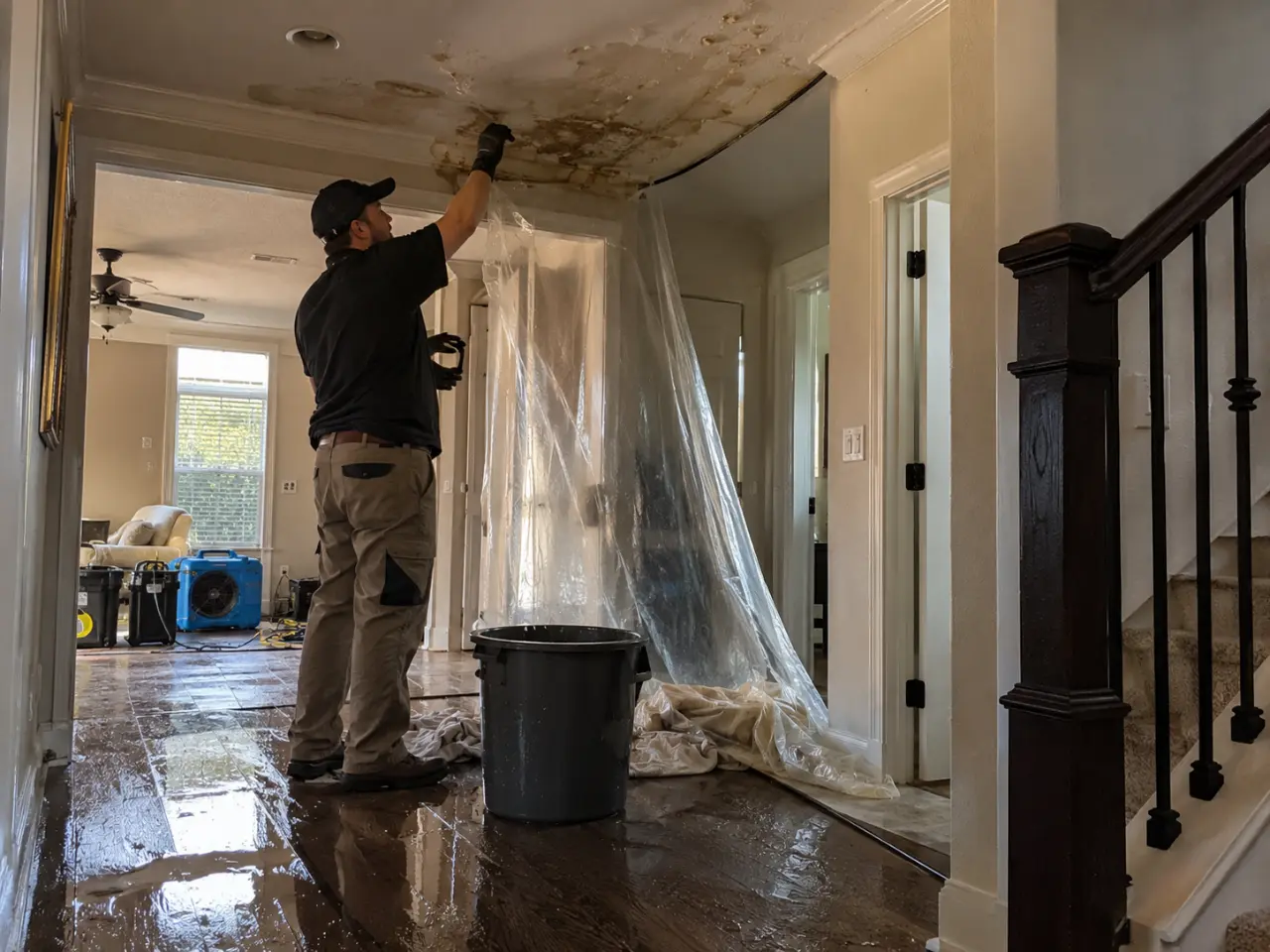
Water mitigation after a slab leak is the process of extracting the water that escaped under your foundation, drying the slab and everything sitting on it, and stopping mold before it starts. In North San Antonio, that work usually has to begin within 24 to 48 hours of the leak, because water under a concrete slab has nowhere to drain and spreads sideways into flooring, baseboards, and wall cavities. Below we walk through how these leaks behave in Stone Oak, Alamo Ranch, and Great Northwest homes, what to do the day you find one, and how long the drying actually takes.
Why Slab Leaks Cause So Much Damage in North San Antonio
A slab leak in North San Antonio is rarely a dramatic burst. It is a pinhole or a hairline crack in a copper supply line or a PVC drain running beneath the concrete, and it can weep for weeks before you notice anything. The water does not pool where you can see it. It wicks up through the slab, creeps under tile and laminate, and soaks the bottom plate of every wall it reaches.
North San Antonio makes this worse in two specific ways. First, the soil here is heavy clay that expands when wet and shrinks when dry, and that movement flexes the plumbing under your slab. Second, most of the housing stock in Stone Oak, Encino Park, and Alamo Ranch was built between the mid-1990s and the 2010s, which puts a lot of original copper supply lines right in the age window where pinhole leaks show up. We see this pattern constantly on water damage restoration Stone Oak calls, where a slow leak under a hallway has been quietly soaking the slab for a month or more.
Here is the part homeowners underestimate: the water bill is the least of it. A slab leak that runs for three weeks can push moisture into 400 to 800 square feet of flooring and the lower 12 to 24 inches of every adjacent wall. By the time a warped plank or a musty smell shows up, the drying job is no longer small.
How Do I Know if a Slab Leak Has Caused Water Damage in My San Antonio Home?
You know a slab leak has caused water damage when you find moisture where plumbing runs under concrete - warm spots on the floor, a water bill that jumped 20 to 40 percent with no change in habits, or a musty smell that will not clear. Any one of those is enough to justify a moisture check.
The signs we ask homeowners to watch for:
- A water bill spike. A pinhole leak can waste 10,000 to 30,000 gallons a month. If your bill doubled, treat it as a leak until proven otherwise.
- Warm or hot spots on the floor. That is a hot-water line leaking under the slab. You will feel it through tile or bare concrete, usually in a hallway, kitchen, or bathroom.
- Flooring that moves. Tile that sounds hollow, laminate that cups at the seams, or hardwood that crowns in the middle of a room.
- Baseboards and drywall. Swelling, soft spots, or a dark tide line along the bottom 2 to 6 inches of the wall.
- Musty air. Mold can colonize wet drywall and framing in 24 to 48 hours, and the smell shows up before you see anything.
- The sound of running water. With every fixture off, you should hear nothing. A faint hiss near the floor is a supply leak.
If you are seeing any of these, do not wait for visible water. Hidden water damage from a slab leak in North San Antonio almost always starts under the floor, and a $150 to $400 moisture inspection now saves thousands in flooring later. We use thermal imaging and pin-type meters to map exactly how far the moisture has traveled before we quote anything.
What to Do After Finding a Slab Leak in North San Antonio
The first thing to do after finding a slab leak is shut off the water at the main and call a licensed plumber - mitigation cannot start until the source is stopped. Everything else on this list can happen in the same hour.
- Shut off the main. At the curb or the street-side valve. This stops the leak from adding more water under the slab.
- Kill the water heater. If the leak is on a hot line, turn off the gas or breaker to the water heater so it stops heating an empty tank.
- Get the plumber out first. A leak detection and repair on a slab line typically runs $400 to $1,500 in 2026 pricing around San Antonio, depending on whether it is a spot repair or a reroute.
- Call a mitigation company the same day. Drying does not have to wait for the plumber to finish, but it does have to start within 24 to 48 hours.
- Document everything. Photos of the floor, walls, and water bill help your insurance claim move faster.
- Do not run your HVAC to dry the house. It moves air but pulls moisture into the ductwork and the rest of the house.
One practical note for North San Antonio homeowners: if the leak is under a bathroom or kitchen, expect us to pull the toilet or move the refrigerator to get air under the slab edge. That is normal, and it is how the slab actually dries.
Water Mitigation Steps for Slab Leaks in San Antonio Homes
Water mitigation steps for slab leaks in San Antonio homes follow a fixed sequence: stop the source, extract standing water, dry the slab and structure, then verify with meters before anything is rebuilt. Skipping the verification step is how people end up with mold under new flooring six months later.
Here is what our crews actually do on a slab leak job:
- Moisture mapping. Thermal camera plus penetrating and pin-type meters to mark the wet zone on the slab, walls, and cabinets.
- Water removal. Truck-mounted extraction for any standing water, and specialty extraction for water trapped under floating floors. On larger losses we bring in emergency water removal San Antonio equipment the same day.
- Controlled demolition. We remove only what is wet - typically the bottom 12 to 24 inches of drywall, baseboards, and any flooring that cannot be saved.
- Slab drying. This is the step most homeowners have never seen. We use negative air pressure and desiccant or refrigerant dehumidifiers to pull moisture up out of the concrete, because concrete releases water slowly.
- Structural drying. Air movers and structural drying San Antonio dehumidifiers run 24 hours a day until the framing, drywall, and subfloor hit dry standard.
- Antimicrobial treatment. Applied to any framing or drywall that was wet, to stop mold before it colonizes.
- Daily monitoring. We log moisture readings every day and adjust equipment until the numbers hold.
If the leak was on a drain line rather than a supply line, the water is contaminated and the job changes. That is a sewage cleanup San Antonio scope, not a clean-water dry-out, and it requires removal of porous materials rather than drying them in place.
How Long Does Slab Leak Water Damage Drying Take?
Slab leak water damage drying takes 3 to 5 days for the structure and 7 to 14 days for the concrete slab itself, because concrete holds water far longer than drywall or wood. The structure can read dry while the slab underneath is still releasing moisture, which is why we keep meters on the slab after the walls pass.
What controls the timeline:
- How long the leak ran. A two-week leak adds days. A two-month leak can double the job.
- Flooring type. Tile and engineered hardwood trap moisture against the slab. Carpet and pad dry faster but usually have to be replaced anyway.
- Square footage affected. A 200-square-foot wet zone dries in 3 days. A 900-square-foot zone with wall involvement runs 5 to 7.
- San Antonio humidity. Our summer and early-fall humidity slows evaporation, so we run dehumidifiers harder here than crews would in a dry climate.
We do not pull equipment on a calendar. We pull it when the meters say the slab, framing, and subfloor are at dry standard - usually two consecutive days of stable readings.
Common Mistakes We See on Slab Leak Cleanup Calls
The most expensive mistake on a slab leak cleanup is drying the visible room and ignoring the slab. Homeowners see the floor dry out, assume the job is done, and rebuild over concrete that is still at 20 percent moisture content.
Other mistakes we run into across North San Antonio:
- Waiting on the plumber before calling mitigation. The two run in parallel. Waiting a week for a reroute gives mold a head start.
- Running box fans and a household dehumidifier. Consumer units pull a fraction of the water a commercial LGR or desiccant unit does, and they cannot dry a slab.
- Replacing flooring too soon. New laminate over a wet slab will cup within a month.
- Skipping the antimicrobial. Wet framing that looks fine can grow mold in the wall cavity where you never see it.
- Not filing the claim. Most Texas homeowners policies cover sudden slab leak damage and the access needed to dry it. Document before you demo.
We see the same pattern in older neighborhoods too. On water damage restoration Beacon Hill jobs, the pier-and-beam and mid-century slab homes both hide leaks under original tile, and the fix is the same: find the wet zone, dry it to standard, then rebuild.
When to Call a Professional
Call a professional when the wet zone is larger than a single room, when the leak has been running more than a few days, or when you smell musty air anywhere in the house. Those three conditions mean moisture has moved beyond what a fan and a shop vac can handle.
San Antonio Water Shield handles the mitigation side of slab leak damage across North San Antonio - detection support, extraction, slab and structural drying, antimicrobial treatment, and the documentation your insurance adjuster needs. We work alongside your plumber, not instead of them, and we tell you honestly when a small leak only needs monitoring rather than a full dry-out. If you are in Stone Oak, Alamo Ranch, Great Northwest, or anywhere along the 1604 corridor and you are not sure whether the moisture is serious, a 30-minute moisture check answers it.
Frequently Asked Questions
How do I know if a slab leak has caused water damage in my San Antonio home?
Look for a water bill jump of 20 to 40 percent, warm spots on the floor, cupping floors, or a musty smell. Any one of these means moisture is likely under the slab. Thermal imaging and pin meters confirm it in about 30 minutes.
What should I do after finding a slab leak in North San Antonio?
Shut off the main water valve, turn off the water heater, and call a plumber for the repair. Then call a mitigation company the same day - drying needs to start within 24 to 48 hours to stay ahead of mold.
How long does slab leak water damage drying take?
Plan on 3 to 5 days for walls, framing, and subfloor, and 7 to 14 days for the concrete slab. Concrete releases moisture slowly, so we keep meters on the slab after the structure reads dry.
Can water mitigation help after a slab leak beneath a concrete floor?
Yes. We use negative air pressure, commercial dehumidifiers, and air movers to pull moisture up out of the concrete. The slab cannot be dried from the top alone, which is why household fans and dehumidifiers fall short.
Does homeowners insurance cover slab leak water damage in San Antonio?
Most Texas policies cover the sudden water damage and the access needed to dry it, though the pipe repair itself is often excluded. Photograph everything and keep your water bills before you file.
Get Help With Water Mitigation in San Antonio
A slab leak will not dry out on its own, and every day you wait gives mold more room. We handle extraction, slab drying, and structural drying for North San Antonio homes, and we document the whole job for your claim.
Call San Antonio Water Shield at (210) 888-0085 and we will get meters on your slab today.