Sewage Backup Cleanup
Sewage Backup Cleanup San Antonio TX Done Right the First Time
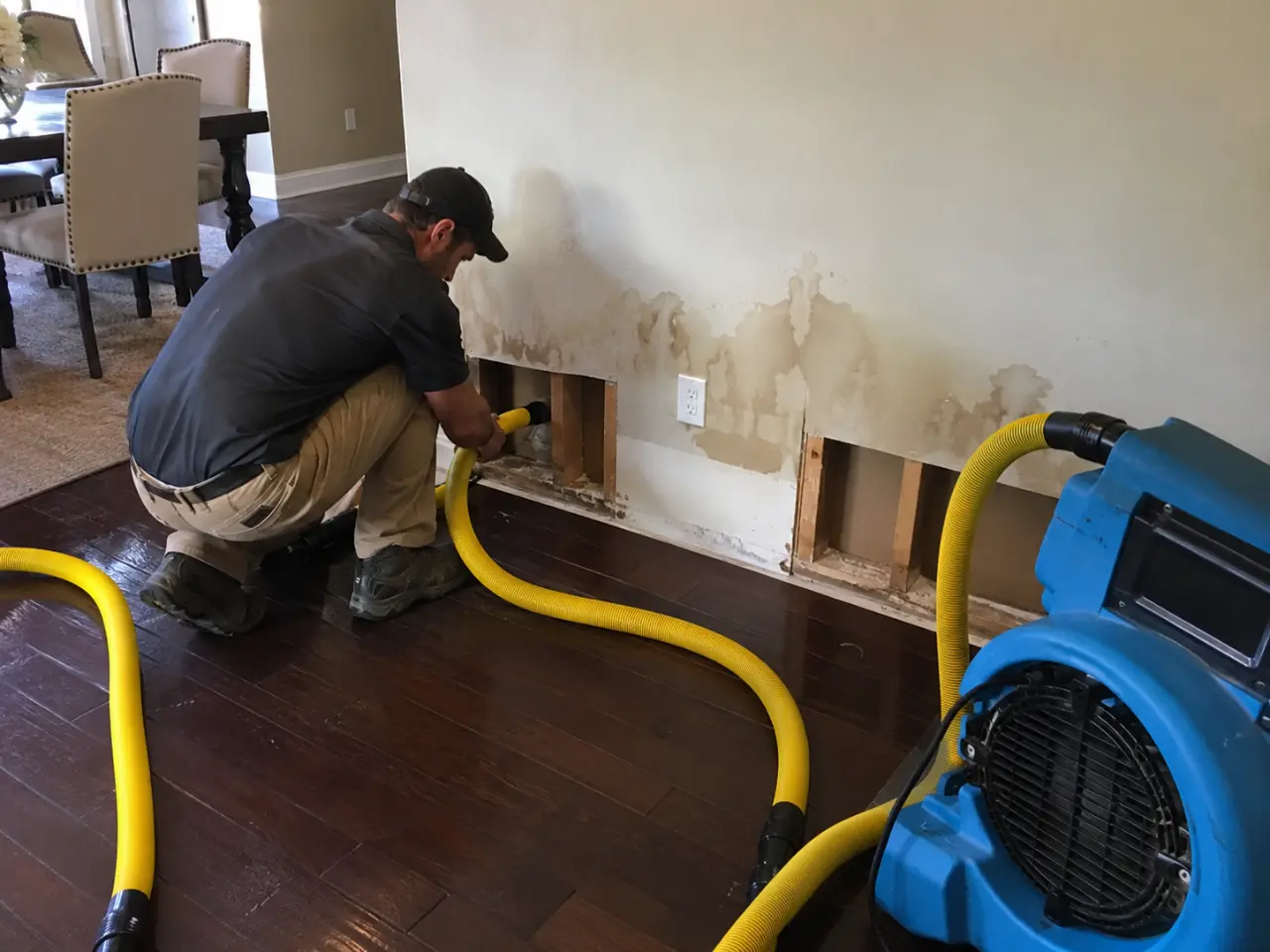
Sewage Backup Cleanup San Antonio TX starts with a phone call and ends with a dry, disinfected home. Raw sewage carries bacteria, viruses, and parasites that soak into carpet, drywall, and subfloor within hours. We extract, contain, disinfect, and dry using truck-mounted units and HEPA air scrubbers, then document everything for your insurance claim. Serving Bexar County since 2020.
Service overview
What Sewage Backup Cleanup San Antonio TX Really Involves
Sewage Backup Cleanup San Antonio TX is a Category 3 water damage service that removes raw sewage, disinfects every contaminated surface, and dries the structure to prevent secondary mold growth. It is needed whenever a main line clogs, a lift station fails, or stormwater pushes waste back through floor drains, toilets, and washing machine stands. We treat the job as a biohazard: containment goes up, air scrubbers run, and porous materials like carpet padding, insulation, and wet drywall come out because no disinfectant fully penetrates them.
San Antonio homeowners call us most often after heavy rain overwhelms older clay sewer laterals, or when tree roots crack a line in neighborhoods like Beacon Hill and Southtown. A slab leak or burst pipe can also flood a room with contaminated water if the supply line crosses a drain field. We handle sewage backup removal in San Antonio, Texas with the same crew that runs our flood water cleanup and structural drying jobs, so nothing gets handed off mid-project. If you are searching for emergency sewer backup cleanup near me in San Antonio at 2 a.m., we answer the phone.
Practical benefits
Why San Antonio Homeowners Call Us First
Sewage backups are not a mop-and-bleach problem. They are a health hazard, an insurance claim, and a drying project that has to be measured, not guessed. Here is what you get when you put our crew on it.
Same-Day Emergency Response
We run 24/7 dispatch out of San Antonio, so a call at 3 a.m. gets a live dispatcher, not a voicemail. Most crews are rolling within 60 minutes and on-site inside 90 minutes anywhere in Bexar County. That speed matters because bacteria multiply fast in warm, wet carpet. The faster we extract, the less material we have to tear out.
IICRC-Certified Technicians
Every lead tech holds IICRC Water Damage Restoration Technician (WRT) and Applied Structural Drying (ASD) credentials, and our remediation crew carries Applied Microbial Remediation Technician (AMRT) certification. That means we dry to the ANSI/IICRC S500 standard and handle sewage as a Category 3 contaminant, not as a spill you can shop-vac up.
Direct Insurance Documentation
We photograph every affected room, log moisture readings with Tramex and Protimeter meters, and write a scope your adjuster can process without a second visit. Most San Antonio policies cover sudden sewage backups up to $5,000-$25,000, and we bill carriers directly so you are not fronting the whole job out of pocket.
Disinfection You Can Verify
We do not fog a room and call it clean. After extraction, we apply EPA-registered antimicrobial cleaning products to every hard surface, then run HEPA air scrubbers with HEPA filter media to pull airborne particles down. Post-clean verification includes moisture readings and, on request, third-party clearance testing before we rebuild.
How service works
Our Sewage Backup Cleanup Process
Five steps, start to finish. You will know what is happening, how long it takes, and what it costs before we start. Here is the sequence our crews run on every sewage job in San Antonio.
STEP 01
Emergency Call & Dispatch
You call (210) 888-0085 and talk to a live dispatcher who collects the address, the source of the backup, and whether water is still coming in. We tell you to shut off the water supply if it is safe and to keep people and pets out of the affected rooms. A crew is dispatched immediately, typically arriving within 90 minutes.
Tools and methods
Equipment and Methods We Use
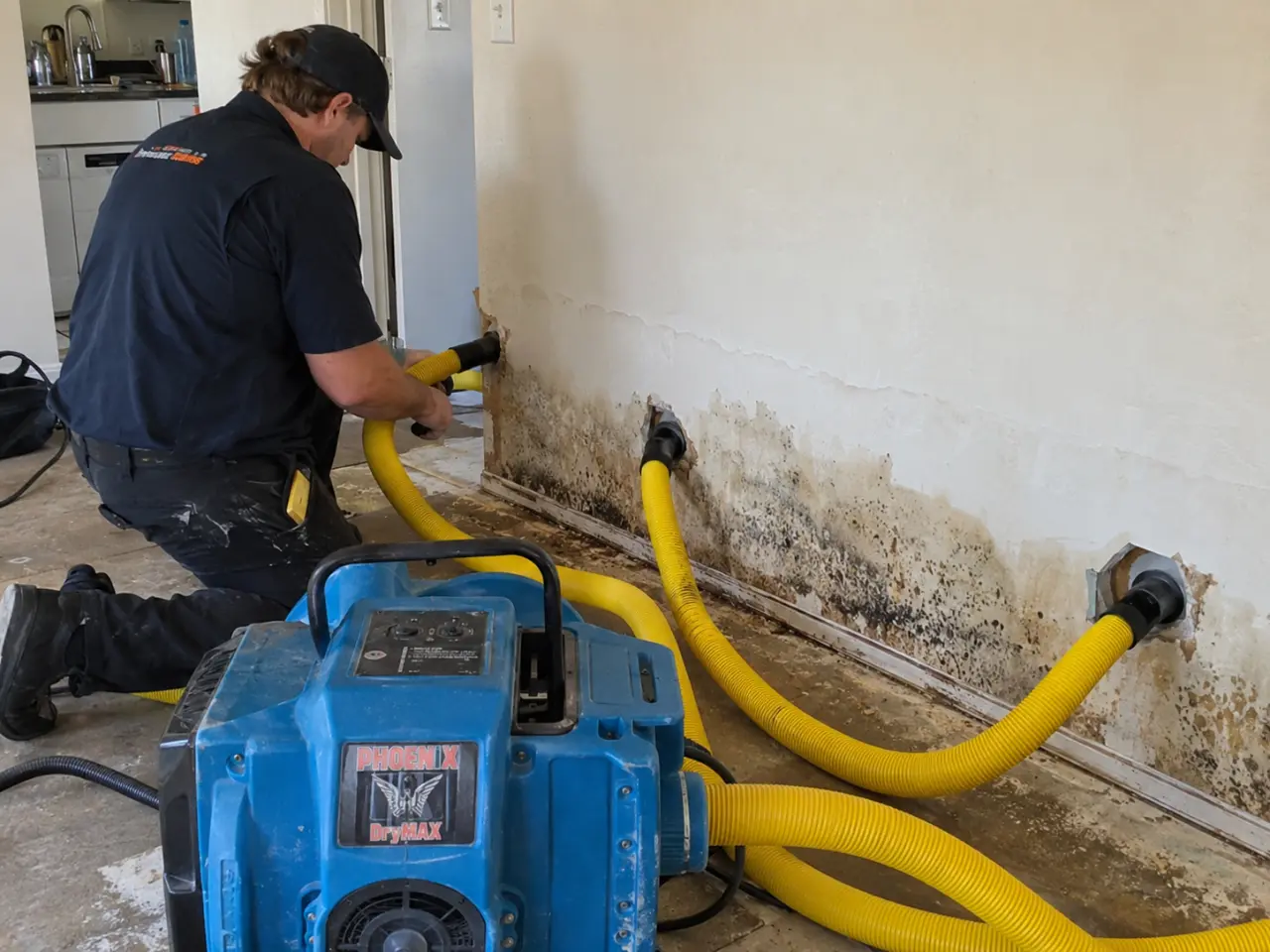
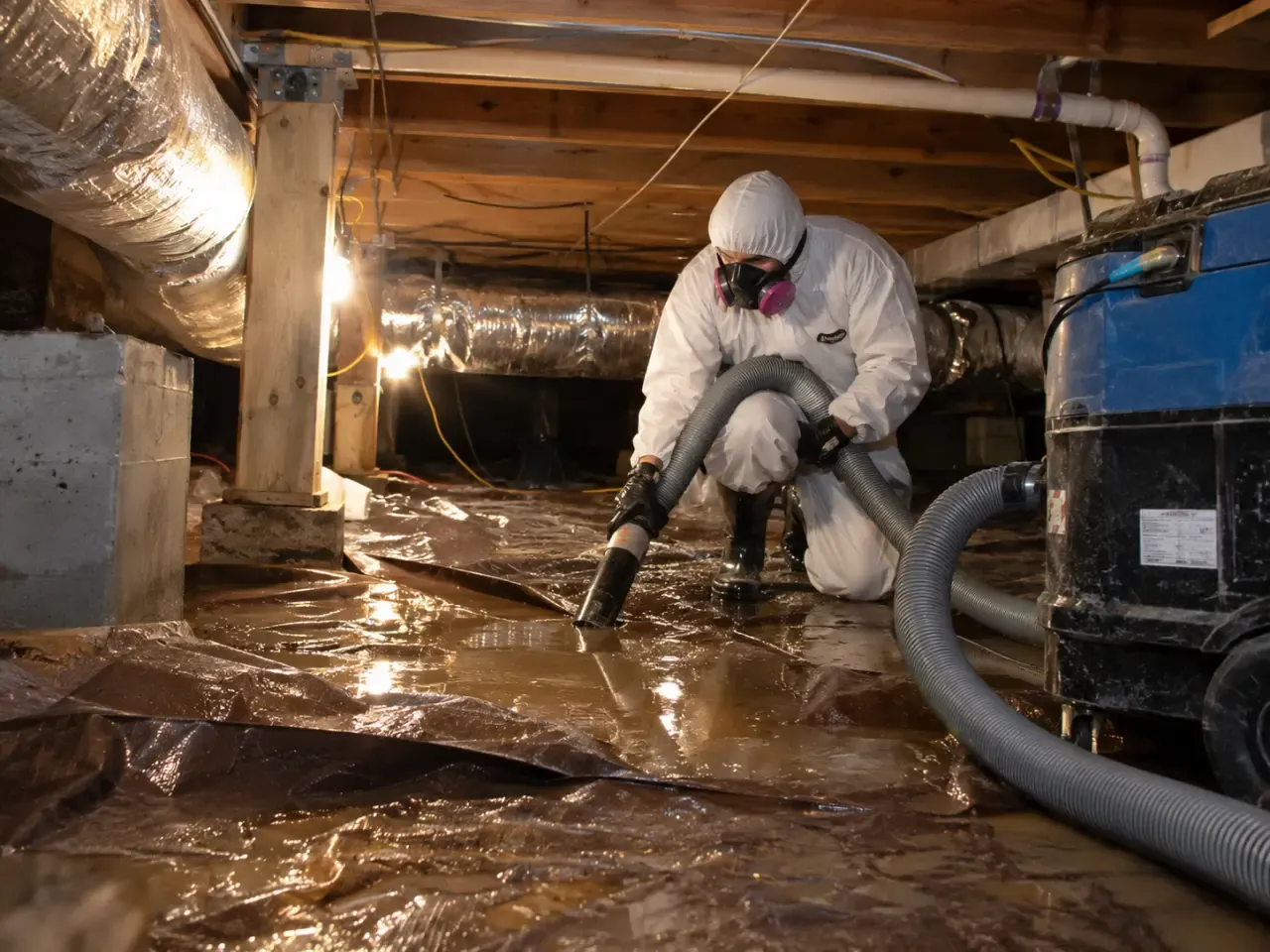
Truck-mounted extraction units
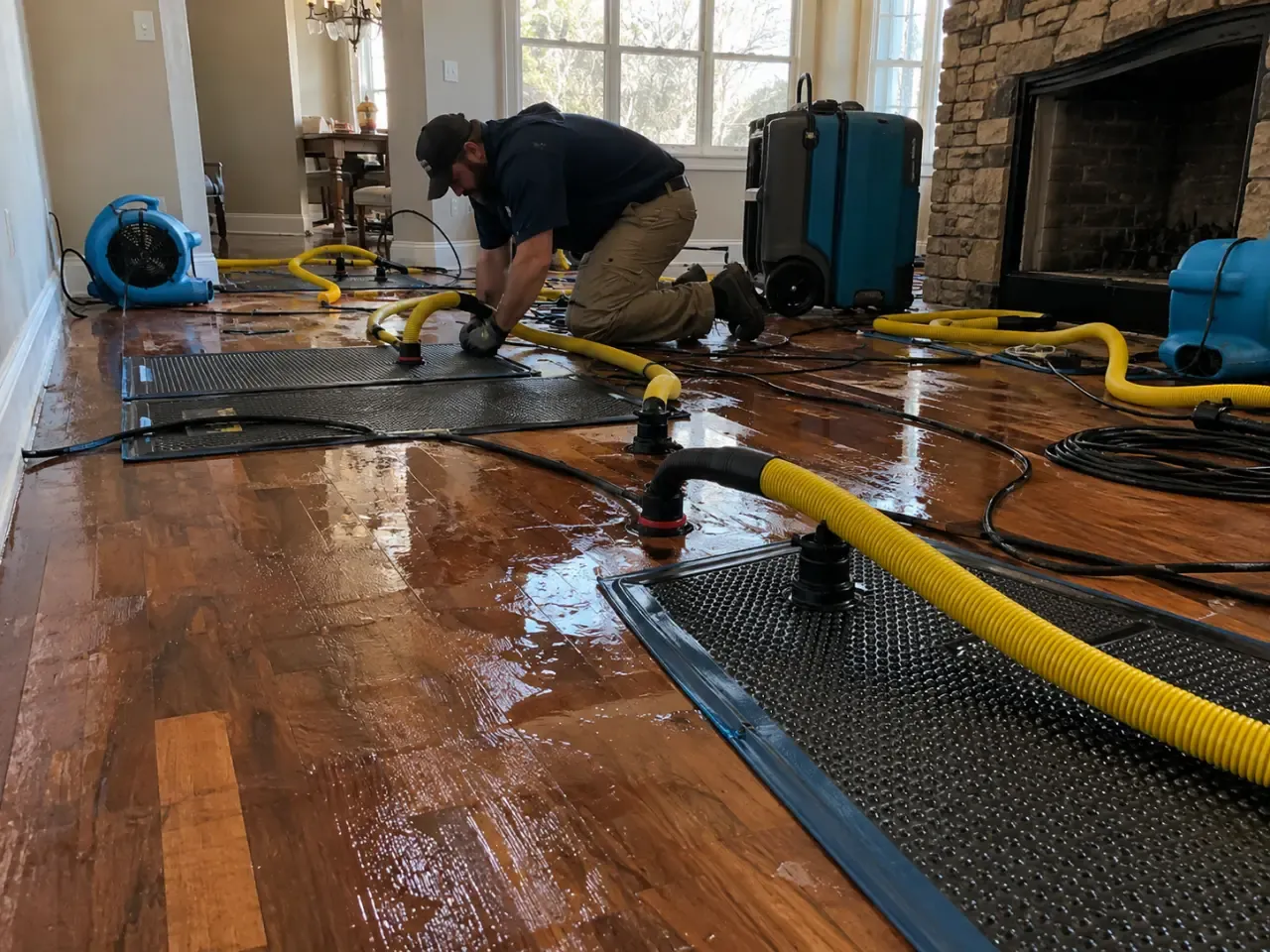
Pull large volumes of standing sewage from floors and carpet fast. These units do the heavy lifting in the first hour, which is when the most contamination can be removed.
Portable water extractors
Reach tight spaces like closets, under cabinets, and behind toilets where a truck mount cannot go. They let us pull water from areas that would otherwise stay wet and grow mold.
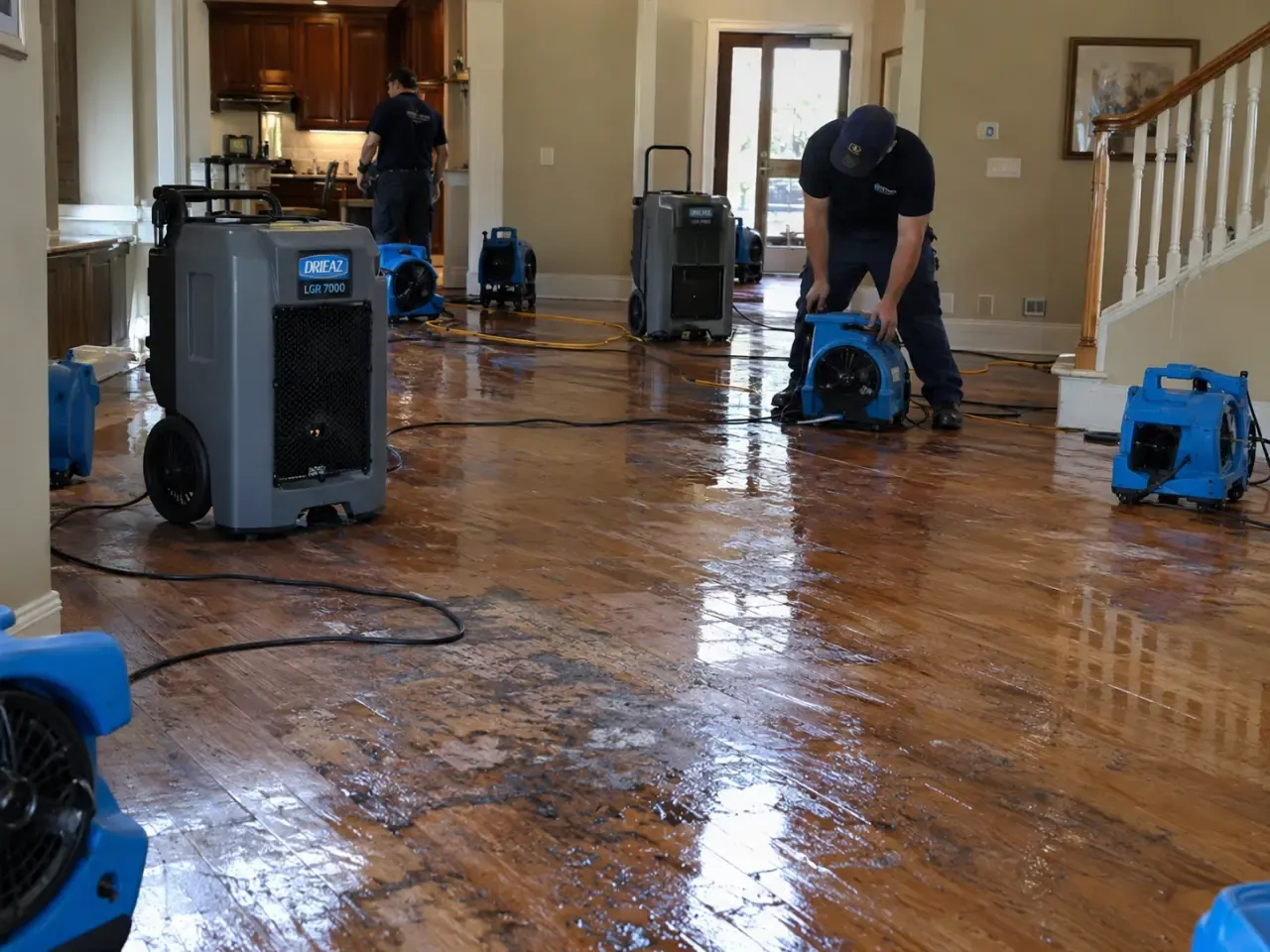
LGR dehumidifiers
Low-grain refrigerant units pull moisture from the air in standard drying setups. We size them to the room volume and monitor with hygrometers to confirm they are keeping up.
Desiccant dehumidifiers
Used when the moisture load is high or the space is cool and hard to dry, like a basement or a commercial kitchen. They pull more water per hour than LGR units in those conditions.
HEPA air scrubbers
Run throughout the job to capture airborne particles, including sewage residue and mold spores. They work with HEPA filter media and negative air pressure to keep the rest of the house clean.
Thermal imaging cameras
Find moisture hidden behind walls and under floors that a meter alone would miss. They tell us where to cut and where to dry, so we remove only what is actually contaminated.
Moisture meters and hygrometers
Tramex and Protimeter meters give us daily readings on framing, subfloor, and drywall. We compare those numbers to the dry standard and do not pull equipment until we hit it.
ANSI/IICRC S500 Standard for Professional Water Damage Restoration
This is the drying standard we work to on every job. It defines how to classify the water, how to set up drying equipment, and how to verify the structure is dry. When we say a room is dry, it means it hit the S500 dry standard, not that it feels dry to the touch.
ANSI/IICRC S520 Standard for Professional Mold Remediation
When sewage has been sitting long enough to trigger mold, we switch to S520 protocols. That means containment, HEPA filtration, removal of affected materials, and clearance before we rebuild. It is the same standard our AMRT-certified technicians train on.
Containment and negative air pressure
We seal the affected area with polyethylene vapor barriers and containment sheeting, then pull air out through HEPA scrubbers. This keeps sewage particles and odors from migrating into clean rooms while we extract and disinfect.
Antimicrobial disinfection protocol
After extraction, every hard surface gets scrubbed and treated with EPA-registered disinfectants and antimicrobial cleaning products. We focus on grout, baseboards, and subfloor edges, then verify with moisture readings and, on request, third-party clearance testing.
Where this service fits
When to Call for Sewage Backup Cleanup
You wake up at 2 a.m. to the sound of a toilet gurgling and water spreading across the bathroom floor.
Call (210) 888-0085. We dispatch a crew immediately, walk you through shutting off the supply if needed, and arrive with extraction and containment gear. We treat after-hours calls the same as daytime ones. Standing sewage is extracted within a couple of hours of your call, and drying equipment is running before sunrise. You wake up to a contained, disinfected room instead of a spreading mess.
A storm dumps four inches of rain and your floor drains back up into the garage and utility room.
We run flood water cleanup and sewage protocols together because stormwater backups are Category 3. Containment goes up, extraction starts, and we disinfect every surface the water touched, including concrete. Your garage and utility room are dry and disinfected in three to five days, and you have documentation showing the loss was storm-related for your insurance claim.
You come home from a week away and find the downstairs bathroom has been sitting with sewage in it since Tuesday.
Long-standing sewage means mold risk is high. We contain the area, extract, remove saturated materials, and run HEPA air scrubbers. If mold is present, our AMRT-certified crew handles remediation before we dry and rebuild. The room is cleared of contamination, mold growth is addressed under containment, and the structure is dried to standard. You get a clean, verified space instead of a room you avoid.
A restaurant you manage has a grease-blocked main that backs up into the kitchen during dinner service.
We run commercial sewage cleanup on off-hours so you can reopen fast. Containment keeps staff and customers out of the affected zone, and our documentation is formatted for health inspectors and insurers. The kitchen is extracted, disinfected, and dried on a schedule that gets you back in service quickly, with paperwork that satisfies both your inspector and your carrier.
Local execution
How Sewage Cleanup Runs in San Antonio
San Antonio sits on expansive clay soil that shifts with every wet-dry cycle, and that movement cracks older clay and cast-iron sewer laterals. When a big rain hits, water infiltrates the lines, roots that found the cracks block flow, and sewage backs up into the lowest drain in the house. We see this most in older neighborhoods closer to downtown, and in newer subdivisions where builder-grade laterals have settled. Our crews carry extraction and drying equipment sized for both single-family homes and commercial kitchens, and we know the difference between a quick laundry-room backup and a multi-room loss that needs containment across a hallway. For a professional contaminated water cleanup for a San Antonio home, the process is the same whether you are in Stone Oak or Westover Hills: contain, extract, disinfect, dry, document. We also watch the calendar. October and November bring the tail end of storm season, and winter freezes can burst supply lines that flood rooms already stressed by summer backups. If you are searching for who can safely clean up a sewer backup in San Antonio, the answer is a licensed, insured, IICRC-certified crew, not a general handyman.
Beacon Hill
Older homes with clay sewer laterals and mature trees. Root intrusion is the most common cause of backups we see here, especially after heavy rain.
Stone Oak
Larger homes on sloped lots where a main line backup can send sewage into a sunken utility room or downstairs bathroom. We stage extra dehumidifiers for these jobs.
Southtown
A mix of historic and renovated homes with tight crawl spaces and original plumbing. Access can be tricky, so we bring portable extractors and compact air movers.
Medical Center
High-density housing and commercial properties where a single grease blockage can affect multiple units. We run containment to keep unaffected tenants out of the zone.
Alamo Ranch
Newer construction on the far west side. Builder-grade laterals and slab-on-grade foundations mean backups often show up at the washing machine standpipe first.
Expansive clay soil that shifts seasonally
Soil movement cracks older sewer laterals and opens joints, which lets roots in and lets sewage out. We see more backups after the first big rain following a dry spell.
Mature trees over sewer lines
Roots find cracks in clay pipe and slowly block flow. By the time you notice a backup, the line has usually been restricted for months. We clean up the mess while your plumber clears the line.
Summer heat and high indoor humidity
Warm, humid rooms dry slower and grow mold faster. We size dehumidifiers for San Antonio summers and monitor daily so drying does not stall out at day three.
Winter freeze events
Freezes burst supply lines and can crack drain lines, flooding rooms with water that mixes with sewage in the drain field. We keep crews on standby during freeze warnings.
Problems we solve
Sewage Problems We Solve for San Antonio Homes
Sewage backups show up in different ways depending on the age of your home and the condition of your lateral line. Here are the situations we see most in Bexar County, and what happens if they are ignored.
Main line clog sends waste into the lowest drain
We extract the standing waste, remove saturated materials, disinfect every surface, and dry the structure. We also document the loss so your plumber and your insurer both have what they need to fix the line and cover the cleanup. Sewage pools in tubs, showers, or floor drains and soaks into carpet, baseboards, and subfloor within hours. The smell lingers for weeks if the source is not cleared and the room is not disinfected.
Tree roots crack an older clay lateral
We treat it as a Category 3 loss, contain the room, and extract fast. Our crew works alongside your plumber so the line gets cleared while we clean. We have run this exact job in Beacon Hill and Southtown more times than we can count. Roots find the joints in clay pipe and slowly block flow until a heavy rain pushes sewage backward into the house. It often happens at night, and homeowners wake up to a flooded utility room or bathroom.
Lift station or city main failure after a storm
Our 24/7 dispatch means we are already rolling while other companies are still checking voicemail. We bring enough equipment for multi-room losses and can stage crews across a neighborhood if the backup is widespread. When the municipal system backs up, multiple homes on the street can flood at once. Sewage sits longer because everyone is calling a plumber at the same time, and mold risk climbs with every hour.
Washing machine standpipe overflow
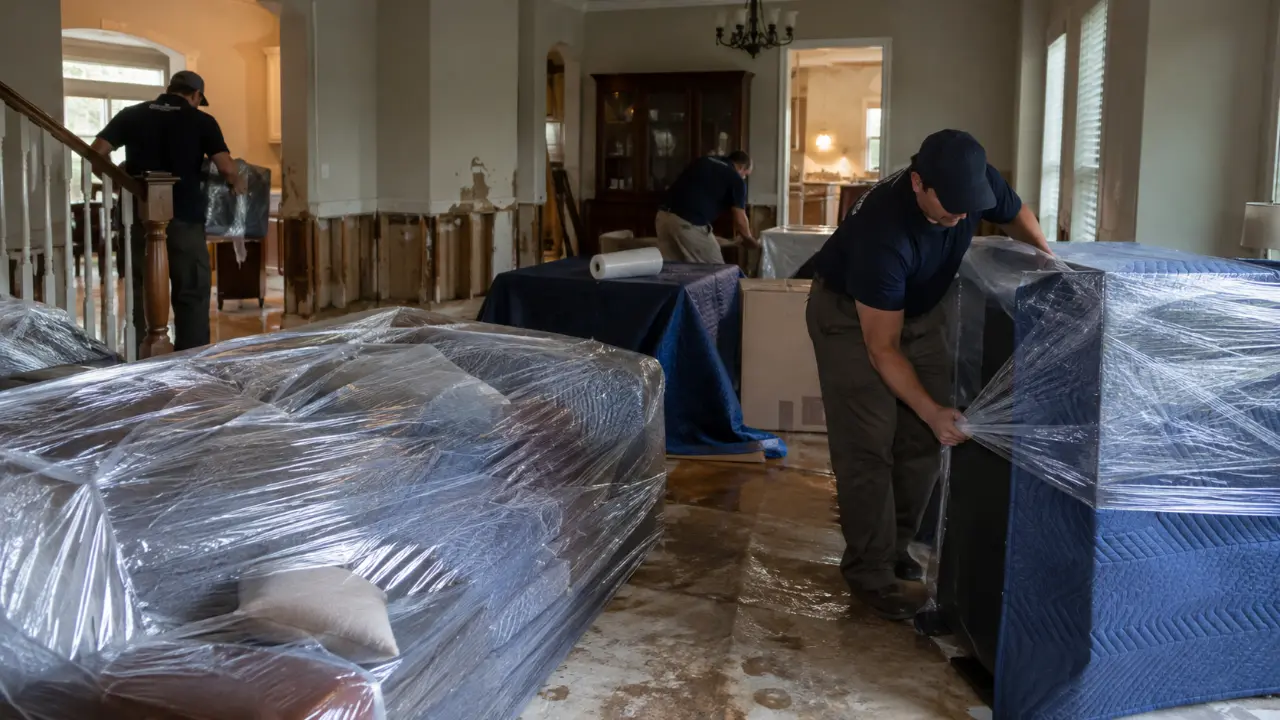
We pull the washer, extract the floor, remove wet pad, and disinfect the area. Drying equipment goes in the same day, and we check the wall cavity with thermal imaging cameras to make sure moisture did not travel behind the drywall. A blocked standpipe drain dumps gray-to-black water across the laundry room floor and into adjacent hallways. If the pad and drywall stay wet, you get odor, delamination, and mold behind the baseboards.
A practical standard for every visit.
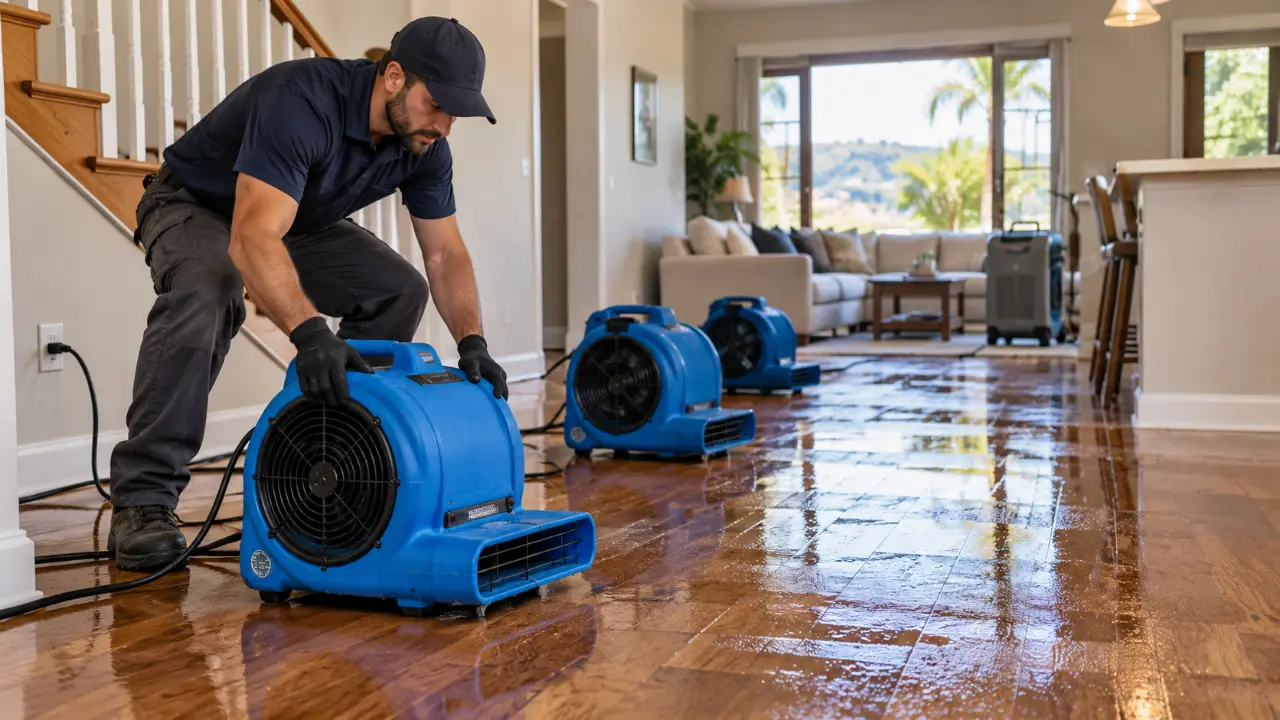
Clear planningPrepared arrivalsCareful workLocal follow-through
Experience in the details
Six Years of Sewage Cleanup in Bexar County
San Antonio Water Shield has been cleaning up sewage backups, slab leaks, and stormwater intrusion since 2020. In six years we have run thousands of extraction and drying jobs across Bexar County, from single-family homes in Stone Oak to commercial kitchens near the Medical Center. Our technicians train on IICRC standards for water damage and microbial remediation, and we carry EPA Lead Renovation, Repair and Painting (RRP) certification for work in pre-1978 homes. We know how San Antonio clay soil moves, how older cast-iron and clay laterals fail, and how to dry a home without tearing out more than we have to.
- IICRC Certified Firm with WRT, ASD, and AMRT credentialed technicians on every sewage job.
- EPA RRP certification for safe handling of lead paint during demolition in older San Antonio homes.
- OSHA hazard communication and respiratory protection training for all biohazard cleanup crews.
- Direct insurance billing and adjuster-ready documentation on every claim we handle.
- Average on-site response time under 90 minutes across Bexar County, 24 hours a day.
Where we work
One local team. A lot of ground covered.
Before the visit
Frequently Asked Questions About Sewage Backup Cleanup
Still wondering?(210) 888-0085
Get everyone out of the affected rooms, shut off the water supply if you can reach it safely, and call (210) 888-0085. Do not run your HVAC, do not try to vacuum the water, and do not walk through sewage in bare feet or socks. Turn off power to flooded rooms at the breaker only if the panel is dry and reachable. We handle the rest, usually arriving within 90 minutes.
Yes. Raw sewage is Category 3 water, which means it contains bacteria, viruses, and parasites that pose a health risk within hours. Mold can begin colonizing wet drywall and carpet padding in 24-48 hours. That is why we run 24/7 sewage backup cleanup in San Antonio TX and treat every backup call as an emergency, not a next-week appointment.
Yes, and disinfection is a required step, not an add-on. We apply EPA-registered disinfectants and antimicrobial cleaning products to every hard surface after extraction, then run HEPA air scrubbers to remove airborne particles. Porous materials like carpet padding and saturated drywall get removed because disinfectant cannot fully penetrate them. Post-clean moisture readings confirm the room is dry and clean.
Contaminated water should be extracted within 24 hours, and ideally within 6-12 hours. The longer sewage sits, the deeper it wicks into subfloor, framing, and cabinetry, and the more material we have to tear out. Same-day sewage water removal in San Antonio also cuts the risk of secondary mold growth and keeps your insurance claim simpler. Call us the moment you see backup.
Keep exploring
Related Water Damage Services
Your next step is waiting
Call Now for Sewage Backup Cleanup San Antonio TX
Raw sewage gets worse by the hour. We are licensed, insured, bonded, and answering the phone 24/7. One call gets a certified crew rolling to your address with extraction and disinfection equipment on board. Call (210) 888-0085 and we will tell you exactly what to do while we drive.
Start with the basics
Contact San Antonio Water Shield
Call (210) 888-0085 any time, day or night. We answer live, 24/7, and dispatch a crew to your San Antonio address, usually within the hour. If you prefer email, send photos and your address to [email protected] and we will call you back with next steps.